If you’ve ever found yourself wondering:
“Am I doing enough?”
“Am I covering the right skills at the right time?”
“How do I even measure if my child is ‘meeting the standard’?”
— you’re not alone.
A lot of homeschooling parents wonder the same things. You want to make sure your kids are learing the skills they need, but figuring out exactly what to teach — and when to teach it — isn’t always easy. That’s one of he reasons why I updated my Article of the Week Units with homeschool friendly teaching guides.
My goal is to take some of the guesswork off your plate and make it easier to teach the Reading Informational Text Standards with real-world articles, flexible activities, and built-in assessment tools.
In this 4-part blog series, I’ll show you how Article of the Week lessons can help you:
✅ Meet every standard with confidence
✅ Balance multiple grade levels
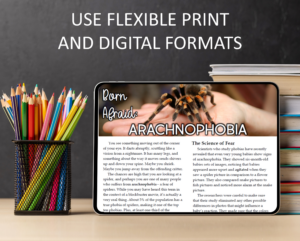
✅ Use flexible print and digital formats
✅ Keep kids engaged with real-world reading
Meet Every Standard With Confidence
Teaching Informational Text Series, Part 1
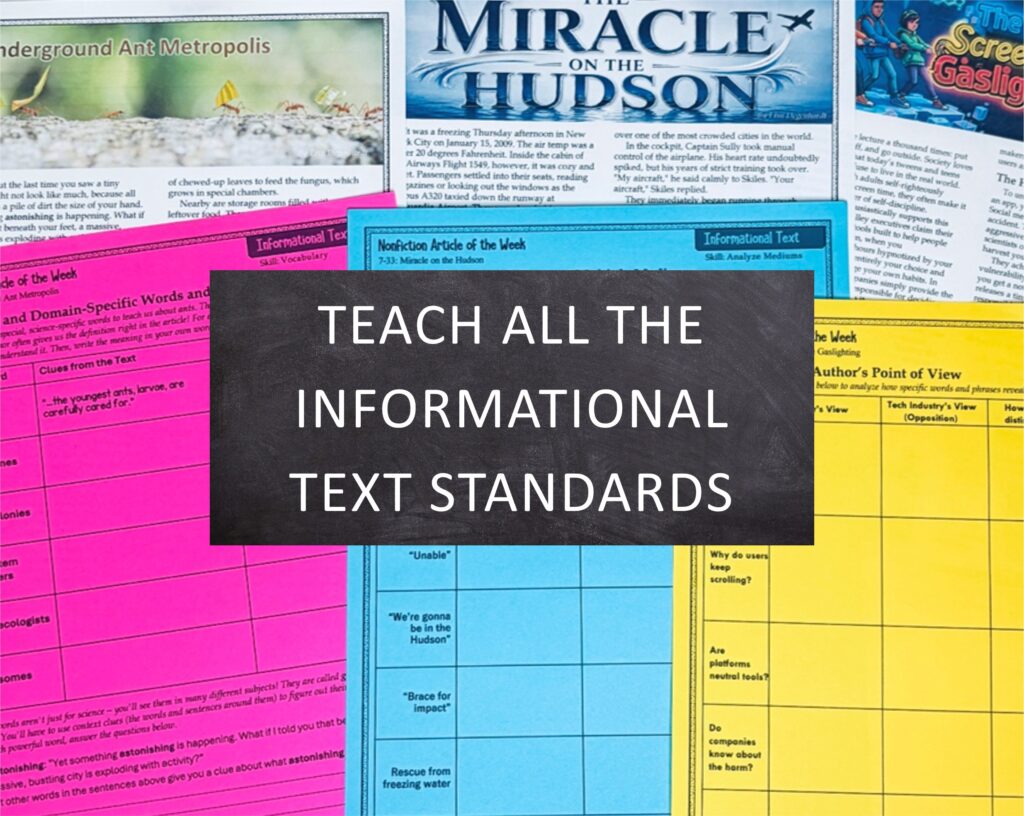
You don’t need to be an expert in Common Core standards to make sure you’re covering them. I’ve already done that part for you. The lessons and activities guide you step-by-step through the skills your child needs to practice.
Every grade-level bundle is carefully put together so that by the time your child completes the articles, they’ll have practiced all of the Common Core Reading Informational Text standards for that grade level.
Each individual article focuses on one specific standard. For example, The Great Pacific Garbage Patch: The Tale of the Travelling Trash is designed to teach main idea and supporting details — standard RI.5.2. Activity 5 in each unit teaches and practices that article’s focus standard.
Your child will also practice other important reading skills with every article, such as finding text evidence to support an answer (RI.5.1) and integrating information from other sources (RI.5.7 and RI.5.9). These skills are so important that I’ve included opportunities to practice them in every Article of the Week unit.
Structured Practice That Builds Mastery
Each unit follows the same easy-to-use structure:
- Start with a basic comprehension check (multiple choice or short answer)
- Practice finding text evidence
- Focus on one core skill like main idea or academic vocabulary
- Integrate information on the same topic from another source
- Complete a skills test with a mix of inference, higher-order thinking, and text evidence questions
The activities build on each other, so your child isn’t jumping randomly from one skill to another. And every activity is connected to a standard, so you’ll always know exactly what skill you’re working on.
A Little Extra Support Built In
Every unit was created with all learners in mind. I’ve included two helpful features:
- A professionally recorded audio version of the article for any reader that needs it
- A slightly modified skills test with just two answer choices instead of four—perfect for extra support without overwhelming struggling learners.
What Homeschool Parents Love About This Approach
✅ It’s simple to follow but academically strong.
✅ It works across grades.
✅ It gives you real evidence that your child is mastering the skills.
➡️ See It in Action
Ready to try a complete unit yourself? Each of these free units includes a step-by-step Homeschool Teaching Guide. Download one today!
- 4th Grade: Clever Canines Article #4-1
- 5th Grade: Great Pacific Garbage Patch Article #5-26
- 6th Grade: Toys-R-Us: The Comeback Kid Article #6-26
- 7th Grade: Storm Chasers Article #7-26
- 8th Grade: Digital Detox Article #8-26
➡️ Step Inside a Lesson: Every activity in an Article of the Week unit is broken down in this post.
➡️ Next Post: Balance multiple grade levels