Teaching Informational Text Series, Part 2
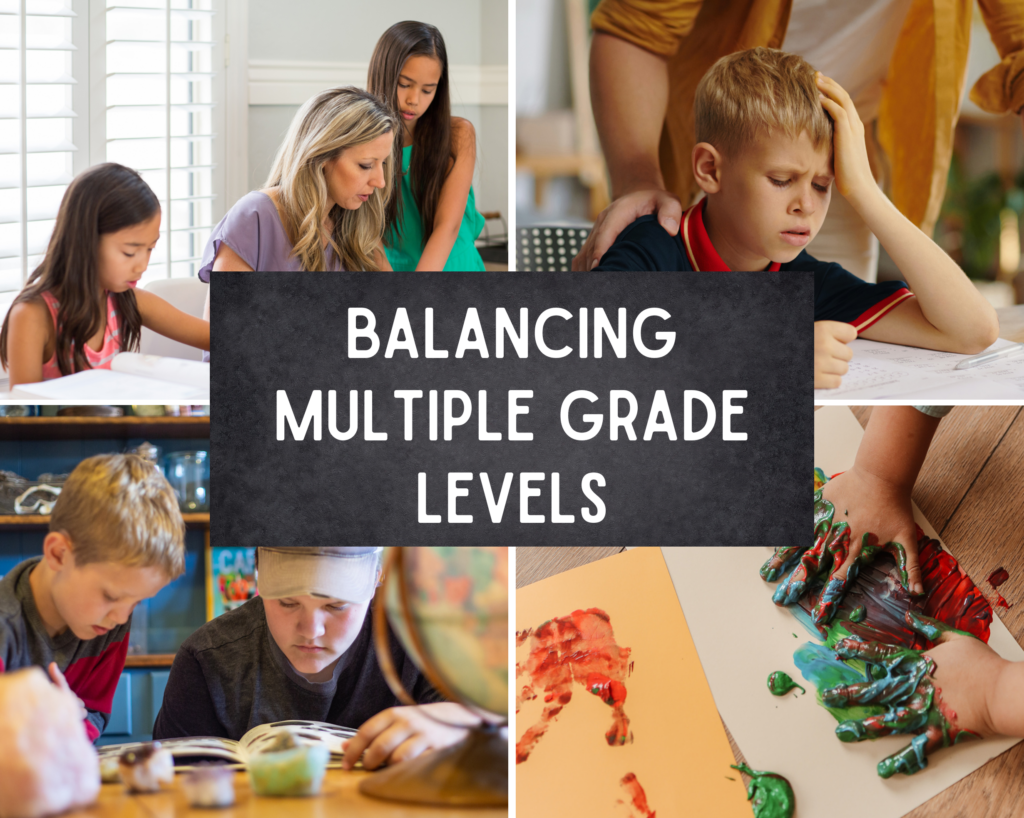
If you’re homeschooling more than one child, you know the struggle: One child needs help pronouncing words in their story. Another needs you to check a math problem before they move on. Meanwhile, your toddler is finger painting the dog. 🐶🎨
This can be one of the hardest parts of homeschooling. Giving your kids one-to-one teaching time is probably one of the reasons why you chose to homeschool. But to make that possible, you also need them to be able to work independently.
Sometimes you just need 20 or 30 minutes at a time to focus on one child while everyone else has something meaningful they can do on their own. Let me show you some independent work options that can help.
1. Professional recordings of the articles
Your child can listen to the professional recording while following along with the written article. This is an easy way to turn reading time into independent work, especially for kids who still need a little support with reading longer passages. They can listen and follow along on their own while you work with another child.
2. Basic comprehension quizzes
You can choose between multiple-choice or short-answer questions. The multiple-choice version works well for kids who need the support of answer choices, and it also makes it easy for you to quickly check their understanding.
The short-answer version takes a little more effort because your child has to come up with the answer instead of choosing from a list. I always let my students use the article to find their answers. Going back to the text, finding the information they need, and using it to answer a question is an important reading skill—and exactly what we want them practicing. With the article there to help, most students can complete either version independently, giving you a little uninterrupted time to work with another child.
3. Text Evidence
You can also choose between two text-evidence formats: annotating or a text bank. With the annotating version, your child goes back to the article and highlights the sentence or sentences that support each answer. The text bank version gives them a group of sentences to choose from instead. This gives your child a little more support while still asking them to think about which piece of evidence best answers the question. I recommend mixing it up and going back and forth between the two formats.
How independently your child can complete the text-evidence questions will depend on how much experience they have with this skill. If it’s new, they’ll probably need a few practice rounds with you first. One option is to have your child complete the first group of questions, usually numbers 1–4, independently. These are literal questions, so the answers are more directly stated in the article. Then you can work together on questions 5–8, which require your child to make an inference and can be a little more challenging. As they get more comfortable with the skill, they can begin completing more of the questions on their own.
4. Skills test
The skills test should be completed independently, but your child should use the article while taking it. I know that may feel a little different from a traditional test, but the goal here is to see whether your child can use the reading skill you’re teaching—not just remember what they read.
How Independent Work Helps Your Homeschool Day
✅ Gives you breathing room during the day
✅ Builds your child’s reading stamina and independence
✅ Reinforces real reading skills — not just busy work
➡️ See It in Action
Ready to try a complete unit yourself? Each of these free units includes a step-by-step Homeschool Teaching Guide. Download one today!
- 4th Grade: Clever Canines Article #4-1
- 5th Grade: Great Pacific Garbage Patch Article #5-26
- 6th Grade: Toys-R-Us: The Comeback Kid Article #6-26
- 7th Grade: Storm Chasers Article #7-26
- 8th Grade: Digital Detox Article #8-26
➡️ Step Inside a Lesson: Every activity in an Article of the Week unit is broken down in this post.
➡️ Next Post: Use Flexible Print & Digital Formats